

In 1960, six-year-old Ruby Bridges walked into an all-white elementary school in New Orleans, escorted by federal marshals, while crowds shouted threats.
She walked anyway.
In the midst of one of America's most tumultuous periods, a young girl stood tall as a beacon of hope and courage in the fight for racial equality. Her story is a powerful reminder that even the smallest among us can make a big impact.
Ruby Bridges & The 1960's
Ruby Bridges was born on September 8, 1954, in Tylertown, Mississippi. On November 14, 1960, Ruby's family received a call from federal authorities informing them that Ruby had been selected for integration and she became one of four African American students chosen to integrate New Orleans' William Frantz Elementary School. The year was 1960, and the Civil Rights Movement was gaining momentum across the nation.
What Was Integration?
Integration referred to the process of ending segregation in schools and other public institutions, allowing African American students to attend previously all-white schools and facilities. This marked a significant shift from the era of Jim Crow laws, which enforced racial separation and disenfranchisement. By integrating schools, integration aimed to provide equal access to education and resources for black students, helping to break down barriers and promote social equality.
A Feat of Courage
Ruby's parents were aware of the dangers that came with this decision. "We knew there would be risks," her mother, Lucille Bridges, later recalled, "but we believed in what we were doing." As Ruby and her family made their way to school, they encountered a sea of protesters. The Ku Klux Klan (KKK) had organized a massive demonstration against the integration plan, which was met with equal fervor by those who supported it. Upon arriving at Frantz Elementary, Ruby was escorted into the building by federal marshals, as local authorities refused to provide protection.
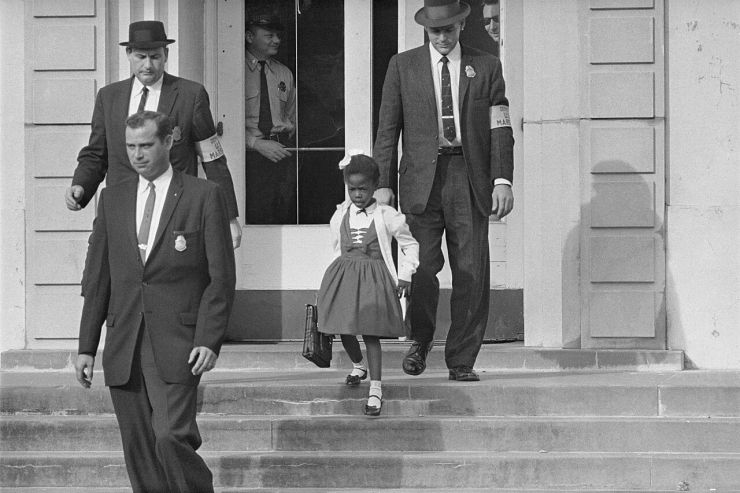
William Frantz Elementary School, New Orleans, 1960. "After a Federal court ordered the desegregation of schools in the South, U.S. Marshals escorted a young Black girl, Ruby Bridges, to school." Note: Photo appears to show Bridges and the Marshals leaving the school. She was escorted both to and from the school while segregationist protests continued.
The months that followed were grueling for Ruby and her family. White parents pulled their children from school in protest, leaving only one person alongside Ruby: a teacher who was assigned to her full-time. The isolation was immense, but Ruby continued to attend classes, with no classmates to share the experience. The reaction from the community was intense and sometimes violent. Protesters hurled insults and even gunfire at the school, forcing federal authorities to provide additional security measures. Despite these dangers, Ruby persevered. Her actions inspired a nation in need of hope during a dark time.
Ruby Bridges Today
Today, Ruby Bridges is a renowned civil rights icon. She has written several books about her experiences, including This Little Light of Mine: The Life of Fannie Lou Hamer, and she continues to inspire countless individuals around the world with her resilience and determination.
In recognition of her remarkable story, Ruby was awarded the Presidential Citizens Medal in 2001. Her legacy extends far beyond this honor; it reminds us that courage has no age limit and that even the smallest among us can spark significant change.
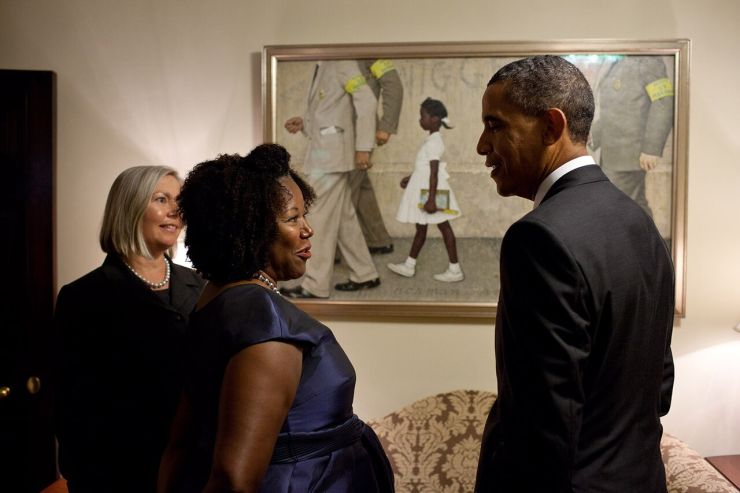
July 15, 2011 "One of the most poignant days of the year was when Ruby Bridges visited the White House. Ruby is the girl portrayed in Norman Rockwell's famous painting, "The Problem We All Live With," which depicts Ruby as she is escorted to school on the court-ordered first day of integrated schools in New Orleans in 1960. When the Norman Rockwell Museum loaned the painting to the White House for a short period of time, the President invited Ruby to view the painting while it was on display outside the Oval Office." (Official White House Photo by Pete Souza)
As we reflect on Ruby's journey, let us be reminded of the power of courage and determination.
Her bravery serves as a beacon of hope, inspiring future generations to carry on her work.
Black Youth Today: Carrying the Legacy Forward
Black history is not confined to the past — it is being written every day by young leaders, artists, activists, scholars, and changemakers. Across classrooms, campuses, communities, and digital platforms, Black youth are reshaping conversations around justice, equity, mental health, and belonging. Their voices, creativity, and leadership are transforming culture and expanding opportunity. Our role is not only to celebrate them — but to protect them.
When youth feel supported, safe, and empowered, they flourish. When they are targeted by bullying, hate, or discrimination, our responsibility is to intervene, advocate for, and uplift them.
We are living in a time of heightened social tension, racial division, and digital hostility. Young people are absorbing these realities — often without the tools to process or heal from them. At STOMP Out Bullying, we remain committed to standing against hate, confronting injustice, and protecting youth by creating safe spaces where empathy and compassion lead. Protecting youth means addressing both the visible and invisible harm they experience. It means responding to crisis. It means building support systems. It means showing up — consistently, compassionately, and courageously. Kindness is not passive. Inclusion is not optional. Safety is not negotiable.
Celebrating Black History Month
Each February, National Black History Month serves as both a celebration and a powerful reminder that Black history is American history, Black culture is American culture, and Black stories are essential to our ongoing story — our faults, our struggles, our progress, and our aspirations. The Association for the Study of African American Life and History (ASALH) who works to promote, research, preserve, interpret and disseminate information about Black life, history and culture to the global community. Each year they choose a theme for Black History Month that reflects changes in how people of African descent in the United States have viewed themselves.
Here are some ways you can celebrate black history this month:
- Support a local Black business
- Visit a Black History or Civil Rights Museum in your local area

- Donate to a Black organization
- Spend time with a Black elder in your community
- Read a book by a Black author
- Sign up to mentor a Black child in your community
- Attend or host a Black culture event in your community
- Learn about an unsung hero of Black history
- Explore Black Music
- Sign up to receive news from a Black organization
- Contribute an essay or blog to a Black media outlet
- Support the black media, black press, and the NNPA
- Engage in healthy conversations about Black history on social media
- Read a biography of an influential Black figure
Follow STOMP Out Bullying